
Tag: Buses Page 4 of 6

The B-Line, Streamlined.

Just before Christmas 2020 TfNSW introduced sweeping changes to bus services in the most bus dependent part of Sydney, the Northern Beaches. Rather than just tinkering around the edges, or dropping a new flashy service, these changes are a big step towards building a genuinely useful network.

The last big shake up to bus services in the Beaches came with the introduction of the not-quite-BRT B-Line in 2017. The B-Line was a step in the right direction towards best practice bus service design, but pulled up short of being all that it could be. It had great branding, solid bus stops and new vehicles, but lacked anything much in the way of traffic priority. Like the buses it replaced the B-Line spends a lot of time crawling along in traffic.
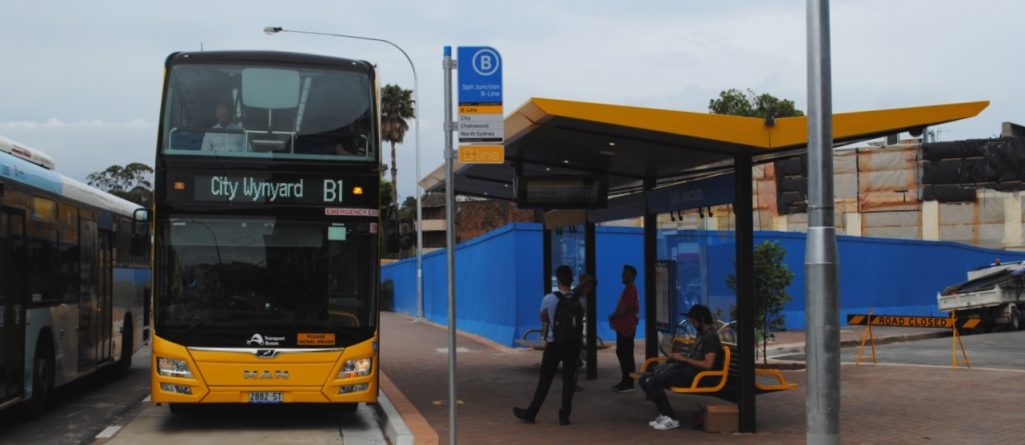
A photo showing a double decker B1 B-Line bus stopping at Spit Junction
The B-Line pulls into a bus bay at Spit Junction

Unlike the vast majority of Sydney, the Northern Beaches lack public transport service running on its own right of way. There’s no trains, no metro, no light rail and no t-way. There are a handful of dedicated bus lanes, but mostly only one directional in peak hour and very much placed where there’s room for them, rather than where they are most useful.

Beaches Link and the B-Line

There are plans underway for a brand new, fully grade separated transport corridor to the Northern Beaches, but at this stage it looks like Beaches Link will be for cars and trucks and, if Sydney’s existing motorway network is anything to go by, probably won’t end up being used to any great extent for public transport. From the day this was announced it was clear that a new right of way for public transport into the Northern Beaches was not going to be forthcoming.

And so in 2017, enter: The B-Line. The B-Line was introduced to provide high capacity, high frequency, limited stops service between the CBD and key hubs along the Beaches. A classic bus we choose to catch. It included new park and ride car parks, bike parking, decent bus stop infrastructure and some minor road redesign. In peak hour, much of the B-Line route runs in transit lanes (AKA HOV lanes) or bus lanes, at least in the peak direction. Out of peak most of the route is in general mixed traffic. These arrangements chop and change constantly as the bus makes its way between Mona Vale and Wynyard.

The Beaches Pre B-Line

By the 2010s Sydney was crisscrossed by an absolute mess of a bus network that had evolved erratically in the 60 odd years since the collapse of the tram network it replaced. It was confusing, difficult to navigate and lacked any underlying logic or coherence.

A 2013 plan produced by the State Government optimistically called ‘Sydney’s Bus Future’ outlined a pathway out of that mess and the B-Line was the first real indication that this plan, unlike most of Sydney’s other transport blueprints, might amount to something. Alas, 4 years on and we are still only up to B1 of 13.

Nowhere was this mess more apparent than the Northern Beaches. The area had grown up and out since the bones of the bus network had been laid years earlier. Outdated ideas about CBD-centric workplaces meant that almost all buses went to Wynyard, never mind the burgeoning business parks and retail centres in and around the area. Out of peak public transport was lacklustre and almost everyone who could (unless they were Wynyard bound) chose to drive. This furthered the perception that the Northern Beaches was, errr, not a place that those living elsewhere could easily visit.

An Underwhelming Success

For the first time, the B-Line provided a clear, legible, frequent and fast-ish bus service to the Northern Beaches. Infact the B-Line was so successful at altering the perception of the Beaches as inaccessible, that the State Government’s plan to extend the B-Line to Newport shortly after it opened was quashed by the NRA (Newport Residents Association) citing concerns that a B-Line stop “threatens to increase traffic congestion, threatens our local and beach parking, threatens our trees and threatens our village life”. Must be quite a powerful bus route to achieve all that.

Andrew Constance tells us that in its first year the B-Line carried more passengers than the population of greater Sydney. This fact is definitely cute, but quite meaningless, since I suspect the services it replaced achieved the same feat. And so, without deep diving into data that is probably not readily publicly accessible anyway, it’s difficult to quantitatively say how the B-Line has changed public transport on the beaches. Qualitatively, I can say that the difference is huge. As an occasional visitor it is now simple to understand how to get to any point on the Beaches, at least as far as Mona Vale. Never again will I have to beg the driver of an L90 to let me off at Spit Junction, lost somewhere in the miasma of different express bus stopping patterns.

What the B-Line definitely didn’t do, however, was provide a transport service separate from the woes of the Beaches over capacity road network. What it also didn’t do particularly well was reduce the complexity of the local bus network in the area. When implemented, the B-Line was basically just superimposed over the existing network. A few routes were removed, but it felt like TfNSW were hedging their bets on the success of the program. The network was still designed to give commuters from far flung suburbs a peak hour one seat ride to Wynyard (or occasionally Manly Wharf or North Sydney) and provide a more basic coverage service throughout the rest of the day.

It was hoped (by me), at the time, that the high frequency, high capacity B-Line would function more like a rail service, supplemented by frequent local bus routes connecting to B-Line stops and other local destinations.

Into 2021

3 years later and it seems like those changes are finally being made now. Whether this is because the obvious success of the B-Line has increased the appetite for more radical (and potentially alienating) change, because Covid has shown us that bold policy change can and should occur once in awhile or because it was always the plan but a slowly, slowly approach was considered necessary to avoid revolt.

I suspect it’s a combination of all 3, but regardless, it’s a win for everyone on the Beaches, whether they use public transport or not.

What’s Fresh

The B-Line continues to run every 3-10 minutes all day, every day, but now runs every 30 minutes throughout the night.

The 199 from Manly to Palm Beach and the 144 from Manly to Chatswood (with that tedious deviation to Royal North Shore removed) are now high frequency services with a 10 minute service all day, 7 days. The 160x, previously the peak hour only L60/E60) has been injected with steroids and is now a high frequency, limited stops service between Dee Why and Chatswood, no longer extending to Mona Vale (change for the B-Line).

Alas, it’s not quite the B2 that residents of the area and anyone interested in good transport planning had been hoping for, but it’s a huge step up for accessibility. Key beneficiaries will be those wanting easy beach access from the North Shore, anyone trying to get by public transport to the new hospital at French’s Forest, and Beaches residents commuting to the Lower North Shore and Macquarie Park area.

Now they just need to paint the buses yellow, give the stops useful names (I’m thinking rename the very catchy ‘Frenchs Forest Rd near Bantry Bay Rd’ to the more helpful ‘Northern Beaches Hospital’), build a few shiny new bus stops with next service screens, throw in a bus lane along Babbage/Warringah/Frenchs Forest Road and viola, the B2. Maybe in another couple of years…

Untangling the Mess

The most remarkable thing about the incremental changes that have been made to the Northern Beaches bus network since 2017 has been the way an outdated and inefficient mess has slowly morphed into a system that actually makes use of best practice network planning strategy. 

Take a look at a section of the pre-B-Line network map around the Spit Bridge.

A screenshot of a bus network map from prior to the introduction of the B-Line in 2017, showing the area between Cremorne to Manly Vale

It’s a cacophony of colour and endlessly complex route intermingling. I’m actually kind of impressed that so much information could be synthesised onto a map like this. Of course, unless bus maps are your fetish *ahem*, it’s probably totally unusable to you.

Now compare to that same section, now.

A screenshot of a bus network map from December 2020, showing the area between Cremorne to Manly Vale

Okay, it’s still a lot, and there’s room for improvement. But after a few seconds, your eyes start to focus in on key information. You think, ‘maybe I can actually use this map to help me get somewhere!’

Two main things have changed.

1. Map legibility.

Colours and line thicknesses have been chosen to reflect the information that is useful to a prospective passenger. Thick Yellow Line = B-Line. Thick dark blue = high frequency. Thin blue = all day local service. Dashed pink = Peak only. Dotted pink = infrequent. ‘X’ designation = express service. Suddenly a casual user can immediately synthesise which routes might be useful for their trip.

2. Route legibility.

Pre B-Line world just had way too many different bus routes. It was a soup that made it extremely difficult to trip plan and almost impossible to find a bus (and get in the right queue) at Wynyard or to flag the right bus anywhere along Military Road. No amount of beautiful map design can make up for the fact that there were just too many bus routes. Pre B-Line there were 45 different bus routes crossing the Spit Bridge. By looking at the map I cannot tell how many of these are peak only or how often they might run. With a quick glance at the Dec 2020 network map I can see that there are now only 14 bus routes that cross the Spit Bridge and that only 4 of them run outside of peak hour. Further, I can see that the B-Line only stops at Neutral Bay Junction and Spit Junction and that the 100 and 144 are all stops frequent services. Amazing!

Incremental Improvements

The importance of change like this should not be understated. Politicians and the public love to obsess over huge shiny glamour projects, but well funded and executed network redesigns can make just as big a change to the wellbeing and productivity of residents.

Thankfully, the Northern Beaches are largely distracted at the moment. With most network restructures like this it’s those that lose out that speak with the loudest voice. Expect complaints from the parts of the Northern Beaches that have lost their twice daily express service to Wynyard, even if they now have an all day service that connects to the high frequency B-Line.

There is, of course, still room for improvement with the network, and thus also the map. The amount of clutter the 229 adds to the map, for a service that runs 5 times a day is frustrating, but leaving this in feels typical of an agency looking to make steady, incremental change. Most routes of this nature have been purged, consolidated into more frequent routes or replaced with on-demand service.

Mosman is still home to far too many low frequency niche bus routes, although these have been reduced slightly since the B-Line. I can’t help but wonder if the door to door one seat ride mentality lingers on in one of Sydney’s most prestigious neighbourhoods, despite being all but dead everywhere else. You could axe the 228, 229, 230, 238 and 246 entirely and not leave anyone stranded without a frequent reliable service a short walk away. In other parts of Sydney a transport agency wouldn’t even consider running so many buses in streets so near to one another. Perhaps a more optimistic reading of these oversights might be that Mosman’s time is soon to come, and those bus routes’ days are numbered.

Assessing the Impact of Metro West

The Sydney Metro West Environmental Impact Statement was released this morning. It outlines the planned approach to construction of the line between Westmead and White Bay including the proposed station locations. The EIS summary document can be accessed here and public submissions on the proposal can be given until June 26th.

I’m going to focus on the proposed station locations which were announced in October last year and confirmed in this EIS.

The 6 westerly stations; Westmead, Parramatta, Olympic Park, North Strathfield, Burwood North and Five Dock, are well placed to meet the travel needs of a growing Sydney.

A map showing the proposed route of the Metro West between Sydney CBD and Westmead
The proposed route of the Metro West. Notice the huge gaps between Bays and Five Dock and between Olympic Park and Parramatta. Image source : NSW Government

It is difficult to consider how the most easterly station in the EIS, The Bays, will interact with the surrounding neighbourhoods, as no solid plans have been released by the State Government as to how The Bays Precinct will evolve. The area is without doubt a planning challenge, given the competing interests of existing residents, demands for new inner city harbourside housing, existing industrial uses, a proposed cruise ship terminal, the heritage value of White Bay power station and of course the fact that the area is of enormous transport importance, being the site of what will be Sydney’s largest motorway interchange.

For that reason I’ll leave The Bays station and hope that the eventual urban plan for the precinct is sympathetic to the surrounding established neighbourhoods and facilitates good active and public transport connections through the area. We can only hope!

It’s good to see the plan as presented in the EIS removes the significant detour across the Parramatta River to Rydalmere station. The loss of coverage to Western Sydney University and the new light rail station at Rydalmere isn’t a major problem due to the metro-light rail interchange available at Parramatta.

The EIS has nothing to say east of The Bays, but we know a proposed station is being considered for Pyrmont and there will be a station in the vicinity of Hunter Street in the CBD, between Wynyard and Martin Place stations (and hopefully providing a seamless interchange to both). Beyond that is anyone’s guess, although it seems the line could be extended southeast to Zetland at some stage.

Within the scope of the EIS I believe that for Metro West, as with existing Sydney Metro projects, lengthy station spacing is leading to missed opportunities for improving public transport connectivity more broadly.

This comes about because of the two competing demands on any metro proposal: travel time and network coverage.

The twin costs of more stations

The argument against additional stations is two-fold, and will be familiar to anyone involved in the push to have a station at Alexandria included in the Metro City and Southwest.

Dollars

The Sydney Morning Herald reported that the cost of each new station on the City and Southwest Metro was between $200m and $630m, not including excavation works. Ouch!

Additional stations on the Metro West corridor would likely fall at the lower end, or even below, this range, as those high prices came about from building under high rise in the CBD and North Sydney. Nonetheless, additional metro stations are no doubt expensive; even if they’re a drop in the bucket of a project with a total cost leaning towards between $20 and $25 billion.

Travel time

The big claim of Metro West is an “around” 20 minute journey between the Sydney CBD and Parramatta. That is significantly quicker than the 30 (timetabled) minutes it takes between Parramatta and Town Hall on an express train today. With a tentative length of 22km between the as yet unfinalised Sydney CBD station and Parramatta, trains would need to run at an average speed (including stops) of over 60km/h to meet the time target.

With a maximum operating speed of 100km/h, there’s a limit to the number of times the metro train can stop along the way and still meet the time goal. The original proposal included an optional station at Rydalmere which involved a significant deviation of the alignment. This has subsequently been removed and it is likely that because of this there is sufficient slack to allow an additional stop or two whilst still keeping the service timely.

One way to avoid this conundrum altogether would be by building quad tunnels with 4 tracks for an express and all stations stopping pattern. Much more expensive to build but ‘future proofed’ against surging demand and able to simultaneously meet both coverage and travel time objectives. This additional capacity would become particularly handy once the Metro West is extended towards Western Sydney Airport.

I assume such a plan is well beyond the budget of the NSW State Government, especially given recent cost blowouts on the Sydney Light Rail and City and Southwest Metro vastly overshadowed the $1 billion shaved off the Northwest Metro.

A last resort option before we dig the bloody thing and are stuck with what we’ve got is to spend a bit extra excavating station boxes at key sites along the way, leaving the option open for additional stations in the future.

Light Rail Integration

The project’s stated goal of integrating with existing transport networks is not being fulfilled due to a missing interchanging with the existing L1 Inner West Light Rail line between Dulwich Hill and Central. Rozelle Bay Light Rail Station is only 700m from The Bays station. Close, but far too far for a convenient interchange.

A map showing the route of Sydney's L1 Inner West Light Rail Line from Dulwich Hill to Central
The L1 Inner West Light Rail Line follows the alignment of the old Goods Line. This has led to a massive bend in the route in Pyrmont that slows the train so much you can get off at Wentworth Park, walk to Exhibition and get back on the same train you alighted. Source: Wikimedia

The L1 line is currently highly congested in peak hours (well, not right now, but usually) and does not adequately perform as a useful service to access the Central Station area from much of its route. This is because of long travel times associated with the winding route alignment through Pyrmont. The lack of a connection to the CBD also limits its usefulness. There could’ve been one at Lewisham West, but that would’ve involved moving Lewisham Station.

A light rail-metro interchange at Pyrmont would go some way to changing this, however it would likely increase congestion on the already crowded Glebe stretch of the line and further induce inbound travel demand by routing passengers bound for Parramatta through Pyrmont.

Metro for Leichhardt North

A better alternative would be a new metro station at Leichhardt North to interchange with the light rail. The current Dan Murphy’s site is immediately adjacent to the existing light rail station and would be perfect for a new metro station. It is nestled in a medium density mixed use neighbourhood that lacks good, direct public transport access to Sydney CBD or Western Sydney. A station here would dramatically increase the utility of the L1 by bringing the urban renewal neighbourhoods in Lewisham and Dulwich Hill into the Parramatta and CBD 30 minute cities. It would relieve congestion on the light rail line and increase capacity as eastbound passengers disembarking at Leichhardt North would free up room for those boarding at Lilyfield, Rozelle Bay, Jubilee Park and Glebe.

In terms of increasing catchment area for the metro, no location is better situated than Leichhardt North. The light rail connects to a variety of mixed use, medium and high density neighbourhoods that are otherwise generally poorly served by fast transport options to Sydney’s major employment centres.

A map showing the proposed Metro West station at Leichhardt North
Leichhardt North has an abundance of active and public transport connections, lacks any sort of nearby heavy rail station and is close to the current planned alignment of the Metro West. Source: Google Maps

Major Bus Connections

As well as the light rail connection, Leichhardt North is an important bus node. The 440, M10 and, most importantly, the 445 all operate past the station connecting with Balmain, Rozelle, Leichhardt and Petersham. A short extension would allow the 470 to easily connect Annandale and Forest Lodge to the new station.

An Active Transport Junction

The station is also directly between two important recreational spaces and associated cycling corridors. The enormously popular Bay Run is 400m from the Leichhardt North site, compared to 1.3km from Five Dock, the closest proposed station. This would make the station accessible by bike and on foot, along completely off-road shared paths from as far afield as Birkenhead Point and Balmain High School.

To the south, the station would provide a direct, completely off-road, metro to cycling connection to Haberfield and Lewisham down the Inner West Greenway. If existing council plans to partner with the State Government come to fruition, the path would be extended south all the way to the Cooks River.

To the East, the surface works associated with the Westconnex Rozelle Interchange will allow the creation of an entirely off-road cycling and walking connection through the new parklands alongside City West Link towards Rozelle Bay.

The perfect place for a new station

A metro station at this location has the potential to dramatically alter accessibility across much of the Inner West. Leichhardt North is uniquely situated at the junction of a light rail line, 4 high frequency bus routes and an extensive active transport network connecting schools, universities, employment, recreation facilities and countless medium density neighbourhoods.

As per the Metro West EIS, a station at Leichhardt North is 800m south of the current proposed alignment. It is 2.4km as the crow flies from both Five Dock and The Bays; the exact midpoint of the two stations. The straight-line distance between Five Dock and The Bays is 4.6km, compared to 4.8km via Leichhardt North. Adding a new station here would require a relatively minor change to the total length of the route.

Metro for Silverwater

The other noteworthy area that is served by the metro alignment but not by a station is in Silverwater.

Silverwater is a primarily light industrial suburb located between Auburn and the Parramatta River, just west of Olympic Park. It’s a big centre of employment, being prime light industrial land with great road access to much of Sydney.

Unfortunately, it has terrible public transport. None of the businesses that make up the industrial core of the neighbourhood are within 1.6km (a 20 minute walk) of the nearest train stations at Auburn or Olympic Park. The only decent bus service in the suburb is the 30 minute frequency 525 that skirts the northern edge of the suburb connecting the adjacent suburb of Newington and the Silverwater Jail to Olympic Park, Strathfield and Parramatta. The two bus routes that pass through the core of the suburb, the 540 and 544, are definitely buses we wouldn’t chose to catch, winding through backstreets and running infrequently. The 544 runs hourly with a few additional peak services and the 540 runs just 11 times a day. The chosen alignment for the proposed Stage 2 of the Parramatta Light Rail connecting to Olympic Park goes nowhere near the suburb.

A map showing the location of the proposed Metro West Station at Silverwater
Silverwater is in dire need of better public transport options. A station at the planned ventilation point on the corner of Silverwater Road and Derby Street would be within a 20 minute walk of the entire suburb and the vast majority of Newington, too. Source: Google Maps

A station at Silverwater would require no alteration to the metro alignment as planned. In fact there’s a ventilation and emergency exit point included in the EIS on the corner of Silverwater Road and Derby Street that could be expanded to include a new station. This would meet the objectives of the Metro West and significantly enhance transport options in a completely car dependent part of Sydney.

Jobs and Growth

Silverwater is a major employment hub. In 2016-17 the ABS recorded over 16,000 jobs in the Homebush-Silverwater Statistical Area. I would estimate that in excess of half of these are based in Silverwater. This employment is generated by the large number of small to medium light industrial businesses as well as the jail in the north of the suburb.

The suburb of Newington would fall on the edge of the Silverwater Metro Station catchment, providing a fast connection to a medium density neighbourhood that lacks adequate public transport.

A station at Silverwater would allow the development of a frequent bus service along Silverwater Road, connecting Auburn Station, Silverwater Station, Ermington Light Rail (proposed), Carlingford Light Rail (under construction) and beyond.

The industrial neighbourhoods of Sydney often have appalling public transport options. This belies their importance as places of employment for many people, particularly those that may lack access to private transport.

Silverwater is extremely traffic choked in peak hour, even by Sydney standards, and despite its central location, is all but inaccessible by public transport. The proposed location of the new station is 1.8km as the crow flies from the closest train station at Auburn, 2.3km from the train and planned metro stations at Olympic Park and 4.7km from the next metro station to the west at Parramatta.

Striking the right balance

Existing Sydney Metro projects have gone ahead with extremely long gaps between adjacent stations. This reflects the uncertainty over whether the Metro is being built as an express service, quickly linking far flung suburbs with business districts and interchange stations, or a local service, connecting nearby neighbourhoods and creating genuine 30 minute cities. It is clear as the Metro experiment manifests, that the project seeks to be something between the two.

As our state government pushes harder and harder to raise the profile of Western Sydney, a train that rapidly links our two CBDs, the state’s largest health precinct at Westmead, our most important events hub at Homebush and the state’s soon to be second international airport at Badgerys Creek, is obviously important. But it’s important to provide people and businesses along the way with access to all these facilities, too.

Nods to this balance have been made with the number of confirmed stations growing from just five when it was announced in 2016 (Parramatta, Olympic Park, an unspecified Northern line connection, The Bays Precinct and Sydney CBD) to the current 8 confirmed stations, with a possible bonus 9th at Pyrmont.

However, it is my belief that the current proposal doesn’t quite get the balance right. Hopefully the lost opportunities of the first two phases of the Sydney Metro can be avoided this time around.

LETTER TO THE EDITOR | Bullet bus is a bust if coach departure’s not more prompt

This letter was originally published by the Central Western Daily: https://www.centralwesterndaily.com.au/story/6433084/letter-to-the-editor-bullet-bus-is-a-bust-if-coach-departures-not-more-prompt

The new coach service connecting Orange to the Bathurst Bullet 2 launches on Monday, but you could easily have missed it.

Unlike the train service, it has received almost no attention outside of the pages of this paper.

Not even NSW Trainlink have announced the service on their website.

READ MORE: Gardening tips to help your garden survive Level 5 water restrictions

Timetables are still yet to be updated.

It’s no wonder we’re hearing so little about it, the new service is a disappointment.

On paper it looks promising.

A new coach connection to the second Bullet should mean more options for commuters and travellers heading from Orange to Sydney.

READ MORE: Second Bathurst Bullet service proves a hit, Orange bus link to start October 14

In practice, NSW Trainlink have partnered with Australia Wide Coaches so that the existing daily Orange-Sydney-Orange coach service will now divert into Bathurst Railway Station to connect with the new train.

This is a problem for two reasons:

One, that coach used to provide a valuable service for people wanting to leave Sydney at 5pm and be back in Orange at 9.15pm.

Now that it has shifted to meet the train, anyone wanting to get to Orange from Sydney after 4pm will need to take the 5.47pm Bathurst Bullet and a coach that arrives into Orange at 10.45pm.

GOING LOCO: The second Bathurst Bullet service is proving popular.
 GOING LOCO: The second Bathurst Bullet service is proving popular.

That makes it a late finish.

More problematically, the ‘new’ coach service is operated by a business that runs a service in direct competition to the train, and it shows.

The existing coaches connecting Orange and the Bullet have six and seven minutes between bus and train arrival and departure.

Just enough time to get off one service and onto the next.

The new train for Bathurst could be complemented by a prompt coach departure to Orange and beyond … this would give locals greater choice when travelling down to Sydney. Reader Jed Coppa

The new coaches will have 20 and 23 minutes.

This means an unnecessary extra 15 minutes for passengers waiting at Bathurst Station.

A small difference but one that makes the direct Orange to Sydney coach that little bit more appealing by comparison.

Passengers taking the new coach to the Bullet 2 will have a choice to make.

READ MORE: Colmar Estate rake in the gongs with pinot noir at Orange Wine Show awards | Photos

They can get off at Bathurst and wait 20 minutes for the train or stay on the coach the whole way to Sydney and arrive 49 minutes earlier.

Anyone who is under any time pressure and can afford the fare will opt for the coach.

The same is the case in the evening.

The Bullet leaves Central at 3.05pm followed by the coach at 3.40pm.

Either way, you’re arriving into Orange on the coach at 8 o’clock.

The new train for Bathurst could be complemented by a prompt coach departure to Orange and beyond.

This would give locals greater choice when travelling down to Sydney.

Instead we’ve had a new service shoehorned into an existing service leaving commuters with no more options than before.

Jed Coppa

Page 4 of 6

Powered by WordPress & Theme by Anders Norén