A Fair Compromise for the Eastern Suburbs Bus Network

Back in May I wrote an analysis of TfNSW’s plan to completely makeover the Eastern Suburbs bus network. With the L2 and L3 light rail lines in full operation for over 12 months, it is well and truly overdue.

Prior to the launch of L2 in December 2019, the last big piece of public transport infrastructure to open was the Hills Metro line in May of that year. The accompanying bus network redesign was fairly underwhelming and so I wasn’t expecting much from TfNSW this time around.

I was pleasantly surprised!

The plan focused on doing more with what they had, with no announcement of any significant increase in rolling stock or labour hours. Instead, they seem to be rejigging allocations to operate more efficiently.

The existing bus network (until December 5th) is based on the original tramlines that criss-crossed the Eastern Suburbs and much of Sydney until mid-century. From there, it’s been added to over the years to become the sprawling mess that it is today.

Does this map of the Eastern Suburbs' original tramways look familiar at all? Source: https://commons.wikimedia.org/wiki/File:Eastern_trams.png#/media/File:Eastern_trams.png
Does this map of the Eastern Suburbs’ original tramways look familiar at all? Source: wikimedia.

That original tram network was designed to get people (men) from their homes in the suburbs to their workplaces in the Central Business District. The transport-speak for this design is called a ‘radial network’. It’s great if you want to go in and out, not so great if you want to go in-between or round-about.

The new network (from December 5th) has been designed to foster the so-called ‘network effect’ of a large public transport system. In practice this means a smaller number of more frequent and more reliable routes connect with each other at key destinations like universities, shopping centres and train stations. This system links passengers to important local hubs from where they can change service to access a wide variety of destinations.

While the old network gave almost everyone in the Eastern Suburbs a frequent and reliable one seat ride to Central Station or Circular Quay, the new network opens new pathways connecting places that were not readily accessible by public transport.

A screenshot of a bus network map from December 2021, showing the area around Green Square and Redfern
The high-frequency network map around Green Square.

Take note of high frequency (10 minutes or better) services heading towards busy train stations that weren’t really an important part of the old network like Green Square, Redfern and (soon to be) Waterloo.

Every line on that map represents a bus, tram or train service that runs at least every 10 minutes all day. If we’d had a look at that same area just a couple of years ago the only lines present would have been the train lines. An aggregation of routes along Anzac Parade and Crown Street might have combined to provide a frequent service in some places, but there was no clarity or consistency.

This new network design allows anyone to quickly determine where and how they can readily access public transport.

The Changes

By and large, the network that will commence operation next month reflects the changes proposed back in May, but despite the recent turmoil the state government has been embroiled in, they have managed to make a few revisions.

Restoring the 373

The most significant alteration between the May and November announcements is the return of the 373. The Coogee to City bus was axed completely in the May redesign, leaving residents of the bourgeois beachside bubble forced to interchange in unsavoury Randwick outside of peak hours. Of course the reverse was also true, leaving Sydney’s troves of backpackers unable to get to the beach quite so seamlessly.

A Mark 5 Mercedes bus running as route 373 bound for Coogee Beach
An Eastern Suburbs icon.

Some residents groups, and local Labor MP Majorie O’Neill, have been particularly outspoken in the battle to save the one seat ride. Their campaign focuses on the number of bus routes being axed, rather than the number of services in operation. This seems like a miss to me, since the performance of a bus network surely shouldn’t be measured in the sheer number of bus routes it has. I suppose the simple narrative of a Coalition government axing bus routes is straightforward and easy to understand.

Thankfully, the backlash was responded to in a fairly sensible manner of compromise, returning the 373 as a high frequency service (every 10 minutes all day, every day) while generally sticking to the planned network design. Aside from restoring direct beach access from the CBD, this has the added benefit of resolving the shortage of buses operating along Flinders Street to Taylor Square, a problem I pointed out in May.

In that original iteration of the changes, only the 396 would have run from the South East to Taylor Square every 10 to 20 minutes. This represented a huge cut in service. With the 373 restored and the 396 also increased to high frequency, there will be a bus every 5 minutes down Oxford Street to Anzac Parade.

I also can’t really imagine a 370 every 10 minutes being anywhere near enough to meet beach travel demand on weekends in Summer. I think a high-frequency 373 is a good idea until the L2 is extended to Coogee Beach via the Havelock Street tram right-of-way as it should have been originally.

Of course this is a zero sum game and all those 373s are going to have to come from somewhere. A few cuts that jumped out at me were the removal of the 305 outside of peak hours, limiting access to the Alexandria industrial area and cutting the 350 at Domestic, meaning a change to the 420 to get to International.

Extending the 370 to Glebe Point

In May I pointed out that the 370 is the thorn in the side of good public transport in the Inner South. The addition of the 373 will reduce the pressure on the 370 at the Coogee Beach end and its extension down Glebe Point Road is a boon for hipsters neighbourhood hoping the Inner West. It’s also good news for Darlington, which was never a good choice for a bus layover.

I think TfNSW could’ve gone a lot further here. The Western half of what was the 370, between Leichardt and Glebe, now just ends on Glebe Point Road. It’s hard to see what value this bus route brings, when most of its route is duplicated by the very frequent 470 that runs to Broadway and Central as well.

The high-frequency network fades out fast once you get to Newtown and the more familiar tangle of bus routes resumes. It’s hard not to read this totally bizarre terminus for the ‘469’ (as it has been dubbed) as temporary.

I could see the 469 being extended East down Bridge Road through Pyrmont/Ultimo to the CBD and perhaps down William Street to terminate at Edgecliff, or even operating as the 373 to Coogee as another cross-town alternative. With the 370 running a high frequency connection to Broadway, the L1 and 433 connecting to Central and the improved 469 running over the Western Distributor to Town Hall, the slow and inefficient 431 would no longer be needed, freeing up lots of buses to be deployed elsewhere.

This whole part of the network redesign feels like a bit of a band-aid until the Inner West region is given the frequent-network treatment that is no doubt underway.

The 307: The Campbell Street Connection

A Map of the May 2021 plan to have the 307 connecting Mascot to Marrickville
Now you seem me…

In May I suggested that the 307 from Mascot to Marrickville Metro would quickly be canned/altered. TfNSW has opted for the latter. It’s a shame, because East/West connections have always been a weak point and this plan doesn’t go anywhere near far enough to improve them. There is potential here, but a dinky low frequency bus that kind of skirts the Inner West to terminate at Marrickville Metro wasn’t really ever going to take off.

A map of the November 2021 plan with the 307 no longer included.
…now you don’t!

Looking towards the next round of network improvements, I’d love to see a high frequency route connecting Sydenham-Mascot-Kingsford-UNSW along the Gardeners Road corridor and another running the length of Cleveland Street from Newtown to Moore Park.

One way to achieve this would be by moving the 370 to Erskineville Road as I suggested in May, combining the 352/355 to run Enmore Road-King Street-Cleveland Street-Cook Road-Oxford Street and diverting the 308 to serve Waterloo. As for the Gardeners Road corridor, there’s nothing wrong with the 358 except its frequency.

Swapping the 303 and 306

This change isn’t of much relevance outside of Mascot, but the 303 and 306 have switched over their routes around Eastlakes. This is good news for UNSW students living in the Brighton area who can get to uni without going down every back street in Eastlakes. I still think the 303 is a massively missed opportunity for a more frequent, more direct connection between Rockdale-Brighton-Mascot-UNSW.

Too many ways through Surry Hills

The last questionable choice I want to rehash is the decision to run the 339 and 374 down different corridors through Surry Hills. The 2 buses serve different parts of the Eastern Suburbs, but a lot of people in Randwick, Coogee or Clovelly live close to either route, so there’s some value having them call at the same stops around Surry Hills. Living near two 20-minute bus routes becomes much appealing if you can board them from the same stop.

With the 373 now running down Flinders, I just don’t see the need to have the 339 serving Albion/Foveaux. Better to move it to Cleveland Street and maintain a decent service through there.

There would still be at least 8 buses per hour in each direction on Elizabeth, Crown and Flinders Streets, so no one in the Albion/Foveaux area would be wanting for buses.

Maybe next time.

Onward and Upward

There’s a bunch of other changes that are either smaller or don’t directly relate to my interests. The good news is TfNSW published a fairly comprehensive community submission report that explains what the feedback said and what they’ve done to address it.

Ultimately, I think it’s a shame that the L2 wasn’t built all the way to Coogee along the existing Havelock Street right-of-way in the first place. If that had been done, the 373 really wouldn’t be necessary and the 396 could do the job of connecting Darlinghurst with the South East. This would free up a lot of rolling stock and labour that could be used to bolster the weaker East/West connections.

That said, it is great to see the state government produce a forward looking bus network redesign.

First the Northern Beaches and now the Eastern Suburbs, in years to come Sydney just might be a pleasure to traverse by bus, if not by light rail.

The missing links of the Orange cycling network

There’s really nothing particularly remarkable about the cycling network in Orange, New South Wales.

You’ll find a similar situation in Bathurst, a town that’s roughly the same size a half an hour drive away. You’ll probably find a similar situation in almost any medium sized regional town in the state.

In some respects, there probably should be. Orange is a prosperous town. Orange City Council charges some of the highest rates in regional NSW. The economy is diversified, being a small agricultural centre, an important health hub and a tourism destination as well as home to a small university campus, an enormous gold mine and a strong public service presence.

Orange might be seen from Sydney as a pinot sippers paradise, but like any regional town it’s much more diverse than the capital city perception belies. Like most towns Orange has a homeless population, some crime and drug problems and a pretty shocking pokies addiction.

Orange’s established middle classes and its disadvantaged residents might not seem to have much in common, but they do both tend to bike. While the prosperous denizens of (mostly) West Orange might have a double garage with 2 SUVs and half a dozen bikes (a mountain bike and a road bike for each member of the household as a bare minimum), those residing in the poorer parts of much maligned East Orange might ride because they don’t have access to a car.

Bike Town, NSW

In Orange, cycling is kind of a big deal. The mayor famously rides, there are 2 bike shops and a dedicated bike mechanic, there are 2 separate mountain bike trailheads (there was another, much larger mountain bike area in the nearby Kinross State Forest, but NSW Forestry decided to harvest that last year, alas.) and Council is even pushing an enormous new mountain bike trail system high on Mt Canobolas.

Given all this, I would have expected Orange to boast a reliable network of bike paths and a fairly stable population of commuter cyclists.

What’s interesting in Orange is that whilst there’s a lot of recreation riders and a smaller but significant number of people riding around the suburbs, it’s actually quite unusual to see someone that is obviously riding their bike into work. In fact, in the parts of Orange where much of the employment is concentrated, it’s unusual to see cyclists at all.

Take a look at this map of the bike paths in Orange:

A map showing bike paths in Orange NSW
Bike paths in Orange are numerous but disjointed.

Here I’ve marked any separated (not in traffic) cycleway I could find. Some of these are small gravel tracks through a local park, others are multi-kilometre concrete shared paths running alongside busy roads. Quite a few of them are recently built (last ten or so years) concrete shared paths that run next to creeks with lots of connections to the local street network.

In these covid times, they are extremely popular and a wonderful asset for those people ‘lucky’ enough to live near them (there’s not really any luck, they tend to run by the creeks in the wealthier  parts of town).

I’m not certain, being a recent transplant to the town, but I’m fairly sure more than half of these cycleways were built in the last decade. So things are happening.

What strikes me looking at this network is how disconnected it is. Aside from a long ride from sprawling North Orange to Dalton Street, a loop around the hospital in Bloomfield or a parabolic ride through 2 beautiful creek-side paths in West Orange, there isn’t really any way to get around town using this network.

If you want to ride in Orange, you’re going to have to get amongst the traffic.

This might seem like no problem, it’s a small town after all. And that’s true to a certain extent. There are plenty of streets I tend to gravitate towards that are light on traffic and a pleasure to ride down. Autumn Street in East Orange, shaded by huge London Planes that mark the changing seasons, is one of my favourites. Franklin Street, which is closed to cars at one point, is another.

But, by and large, traffic in Orange is pretty bad. Parking is abundant, streets are wide and difficult to cross and so people tend to drive even for short distances. Council has made some attempts to address this, mostly by building multi-lane roundabouts at as many intersections as they possibly can. These have the effect of increasing the speed of cars and making the streets even harder to get across as a pedestrian. Unsurprisingly, these have led to more cars and less walking.

For even relatively confident riders, navigating an endless run of multi-lane roundabouts is hard work and feels very, very dangerous. To their credit, most drivers in Orange seem to see cyclists as something of a curiosity and tend to slow down and give way. Most drivers.

So Orange has a lot of bikes, but people only ride them where there’s no other option or for rsport. On any given weekend you’ll find plenty of families and such riding on those extensive creek side paths, or driving their bikes out of town to Gosling Creek or Lake Canobolas to ride there, but what you won’t find are people riding around town because it’s a great way to get around. I confess to being one of the stubborn few.

I can see how this came to be. The Council saw the benefit of encouraging cycling so they started putting in some new paths. There were all these green corridors around the place that seemed like the obvious place to start, so they did. New suburbs popped up on the edge of town and changing development practices meant that these areas got some sort of bike path by default. This has left the town with a lot of bike paths, but only in areas that had the space set aside at some point. In the older parts of town there’s almost nothing.

From a functional stand point this means that while there’s lots of enjoyable spots to go for a Sunday arvo cruise, if you want to get from A to B it’s highly unlikely the cycle network is going to be much help.

To illustrate this point I’ve overlaid the main employment areas in Orange with the bike network. In the Centre of town is the CBD, to the very south are the Hospitals, to the far north is the University and the rest is a mix of retail and light industrial. I’d say a good 90% of the jobs in Orange would be based in these areas.

A map of Orange NSW showing bike paths and employment areas
If a bike path in Orange goes near your work it’s a total coincidence.

As you can see, the bike network doesn’t really go to most of these places. Where it does, it kind of skirts the edge. Not much help given these areas are going to have the most traffic, and lots of trucks at that. The only exceptions are the hospital, university and North Orange shops which have cycle paths running directly to them.

The other issue is that when you zoom in you realise that there are a lot of missing links. And I don’t mean the kind of ‘missing links’ the state government uses to justify literally any road between any 2 points. I mean missing link like you’re riding your bike along a great bike path and then it just ends only to start up again a block away. This happens a lot in Orange.

Take the trip from Orange Hospital to the CBD for example, probably the 2 main trip generators in town. There is a separated cycleway most of the way, but it has quite a few gaps.

A map of a part of Orange showing the gaps in the bike path.
Black is bike path, purple is a key employment centre, red is the street you’ll need to share with cars, buses and trucks to get back to the bike path.
  1. Turning off the Southern Distributor onto Anson Street the bike path abruptly ends. You’ll need to ride down Anson Street for about 100 metres, there’s not even a footpath for kids to ride on. I rode this way this morning and a semi-trailer went by me on what is a narrow street without any lane markings. Fun times.
  2. Heading North you’ll soon find yourself on a wonderful new path that runs alongside a small creek. The creek goes the whole way into town, so you’d think the bike path would too. Unfortunately, one block of it was never built. For some reason one tiny section of creek goes through a privately owned oversized backyard. In 2004 Council released a Development Control Plan outlining the possibility of acquiring just a small part of this large backyard to finish the path, but 17 years later that hasn’t happened.
  3. Back on the path and 2 blocks north it ends again. This time you’ll have to get onto Anson Street and pass through one of the aforementioned double lane roundabouts before rejoining the path in Matthews Park, home to a model railway!
  4. Finally, the path ends for real on Kite Street on the Southern edge of Orange CBD, one block short of the main drag, Summer Street. You’ll need to ride in traffic to get to your destination from here.

This is more or less how any bike trip in Orange plays out. Unless of course you’re riding through oft overlooked East Orange where there pretty much just isn’t any bike paths.

What can be done?

The thing about Orange is that the streets are famously wide. The town was laid out on a grid with all the streets in the old part of town being 2 chains wide. That’s about 40 metres in newspeak. Most of these streets are currently set up with one lane in each direction and loads of room for diagonally parked cars on both sides. There’s also quite often street trees between the kerbs. Some busier streets are 2 lanes each way with parallel parking on both sides.

The other thing about the streets in the 19th century parts of Orange is that they are on a grid. The great thing about a grid is that you can prioritise different types of traffic on parallel streets. The most obvious example of this is a one way network, but it can work in other ways, too. If there’s 4 parallel streets, you could, for example, have all open to local traffic, one also for buses, another for trucks with wider turning circles and another for bikes, with plenty of traffic slowing infrastructure and safe crossings at intersections.

Because the streets in Orange are so wide, putting in completely grade separated shared bike paths doesn’t need to come at the cost of reducing parking, let alone losing a traffic lane.

There are two streets in Orange that I think would be perfect for this treatment. The first is Lords Place, that runs North-South from the aforementioned bike path dead end on Kite Street. It’s not a high traffic street and it could easily have a bike path installed without dramatically altering existing traffic arrangements. The biggest barrier to be overcome for riders would be safely getting through the roundabouts at Kite and Byng Streets.

The other is Margaret Street, which runs East-West to the North of town. This street doesn’t have much through traffic at all, being broken by the rail line which has a pedestrian and bike only level crossing. A bike lane on Margaret Street could be easily implemented and would connect 3 separate parts of the network.

A map showing possible new bike routes that could be built in Orange.
How to fix those missing links.

There are a bunch of other places in town that could do with the missing link treatment, but these would be a huge start. A couple of relatively minor changes using existing street or green corridors could turn Orange’s fun and friendly weekend routes into a legitimate cycle network that would give people a safe and healthy alternative way to get around town.

Planning for a less snowy Snowies

Last month the New South Wales State Government released what they call a ‘Special Activation Precinct’ Masterplan and Amendment to the 2006 Kosciuszko National Park Plan of Management.

I hadn’t really heard of a ‘Special Activation Precinct’ before, but it made me think of China’s ‘Special Economic Zones’ like Shenzhen, which went from being a town the size of Newcastle in 1982 to a city with the population of Sydney + Melbourne + Brisbane + Perth +…you get the idea, in 2020. That and the endless fascination the word ‘precinct’ seems to hold across all levels of government.

It turns out ‘Special Activation Precincts’ are a state government policy of the last 3 years. To quote from the NSW Department of Planning, Industry and Environment:

Special Activation Precincts are a new way of planning and delivering industrial and commercial infrastructure projects in dedicated areas in region (sic) NSW, by bringing together planning and investment support services.

So far there are two, one in Parkes and one in Wagga. Both are enormous industrial parks taking advantage of the construction of Inland Rail through the towns. They seek to streamline the delivery of rezoning and necessary infrastructure to build huge industrial parks featuring solar farms, recycling and waste facilities, logistic hubs and high intensity agriculture and manufacturing, think feedlots and abattoirs.

Now this might seem a far cry from the Snowy Mountains, but I think it speaks volumes about the government’s intention here that they’ve chosen to use this particular policy instrument to plan the future of our fragile alpine ecosystems.

The 2021 Snowy Mountains Special Activation Precinct Draft Masterplan and Draft Amendment to the Kosciuszko National Park Plan of Management (henceforth ‘the plans’)

The plans make the persuasive argument that much has changed since 2006 and it’s time to reassess some of the assumptions made at that time. What’s interesting here is a chance to compare the values of government 15 years apart. The 2006 plan focuses on limiting growth. In fact, in a period following on from fairly substantial growth in the Thredbo Valley in particular, the 2006 plan effectively blocks any additional growth in terms of bed numbers and seeks to wind back commercial access as leases run out.

A screenshot of the area map from the SAPM
If you aren’t familiar with the Snowies, this map from the SAP Masterplan shows all the key places. Source: NSW Government.

One example of this is the Ski Rider motel (on the Kosciuszko Road between Sawpit Creek and Sponars) which was due to have its lease expire in 2025. The 2006 plan stated in no uncertain terms that it wouldn’t be renewed, on the grounds of limiting sprawling human landuse along the road corridor.

An aerial image showing the Ski Rider Hotel
The Ski Rider lives to exist another day. Source: Google Maps.

The 2021 plan on the other hand, celebrates the growth in demand for park visitation and sets the stage to facilitate further growth as much as possible. This includes extending the lease of Ski Rider, amongst much else.

It’s a complex plan and I can’t say I’m 100% around the details, so I’ll refer you to:

The National Parks Association is a charity I support that lobbies to expand and improve our national parks as well as supporting visitation and access. The fact that an organisation that activity supports human use of national parks is so opposed to the plan is a fair indication in my mind of its abundant flaws.

What I do want to focus on is a few things that jump out at me.

Did somebody say ‘Fragile Alpine Ecosystem’?

Hello commercial air movements

Since at least 2006 commercial air movements have been prohibited in the Kosciuszko National Park. If you’ve spent any time down at the Snowies you’ll likely be aware of this as the skies are largely empty. When a chopper does come over, you know that it’s probably involved in an emergency rescue. For me, this relative quiet is an important part of enjoying what the 2006 and 2021 plans refer to as the ‘solitude and self-reliant and adventurous recreation’ that I like to undertake in the park.

The 2021 plan aims to remove this prohibition and allow commercial aircraft to take off and land at Perisher, Thredbo and Charlotte Pass. This would mean the rich and famous could chopper into our alpine resorts from Cooma Airport or Canberra.

Imagine: enjoying the blissful quiet of a snowy winter evening, watching the lights of the groomers make their way up and down the hill, only to hear the ever-increasing thrum of a chopper rotor getting nearer. The noise becomes overwhelming and you wander down to see what the emergency is. Oh, it looks like the Morrison family have decided to duck down from the Lodge (as opposed to a lodge) to take some selfies in the snow!

The serenity of Charlotte Pass Village has traditionally been taken fairly seriously in planning. Parks don’t plow the road pass Spencers Creek, so in winter you need to travel on an oversnow vehicle or a small bus, depending on how much snow cover there is. For at least the last 25 years, aside from management vehicles and these public transport vehicles, no motorised private cars have been allowed into the village in winter. It strikes me as absolutely insane to think that helicopters won’t ruin the alpine village ambience whilst acknowledging that cars will.

As well as the shuttling of those who are happy to burden the rest of us with the externalities of their convenience, we would likely see tourism operators start running chopper joy flights out of Thredbo and Perisher. It would also be possible under the plan for a company to apply to run heliskiing on the main range, an area that is currently remarkable for how peaceful and quiet it is in the winter, being only accessible on skis or snowshoes from either Charlotte Pass, Guthega or Thredbo.

Hello commercial vehicles on the Summit Trail

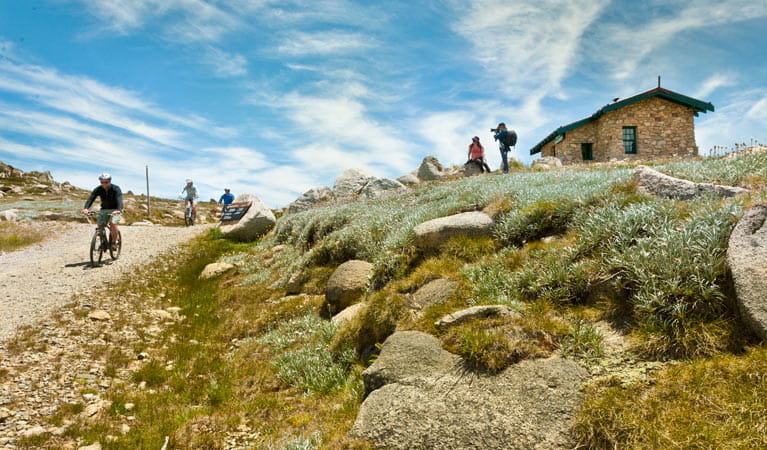
The second huge commercial overreach of the 2021 plans is to reallow commercial vehicles on the Summit Trail. For those that don’t know, the Summit Trail is an extremely popular walking track and boardwalk from the top of the Kosciuszko Chairlift at Thredbo to Seaman’s Hut for the summit of our highest mountain and then continuing around to Charlotte Pass. In Summer, and to a less extent the shoulder seasons, this walking track is enormously popular. As in, very popular. Like, it’s hard to explain just how hectic parking at Charlotte Pass gets on public holidays and weekends if you haven’t seen it.

The Summit Trail, looking peaceful. Source: NSW National Parks

This demand is in part why the State Government feels the 2006 plan that focused on limits to growth needs amending, and it’s easy to see their point. People really want to visit the park and we could be managing that better.

As recently as the 1960s you could drive up the Summit Trail along the Kosciuszko Road as far as Seaman’s Hut, park there and bag the easiest of the 7 summits. At some point the excellent decision was made to close the road at the Pass and turn it into a track for walkers, bike riders and the occasional park ranger in a ute. Of course, the road is maintained to allow Parks to service the facilities at Seaman’s and for emergency vehicles to get through.

The 2021 plan seeks to reallow commercial operators to use the road to run small buses for up to 20 visitors at a time. This is apparently “for the transport of multi-day Snowies Iconic Walk participants”. The Snowies Iconic Walk seems to be a project to upgrade some of the tracks around the Park to create an Overland Track style multi day hike. Why on earth tourism operators would need to run buses up the side of our highest mountain to facilitate people doing a 4 day 55 kilometre bushwalk is not clear to me.

Now with 40% more beds!

Perisher, Charlotte’s and Thredbo have hardly grown in my adult lifetime whilst the popularity of visiting the two major resorts has absolutely exploded. Note that lift ticket prices have doubled in ten years, whilst the same number of accommodation beds in each resort are still available. This seems problematic, but it’s for a sensible reason. Alpine ecosystems are extremely fragile, so much so that on the main range you can see the paths that 4WDs cut decades ago. The 2006 plan set the bounds of future development on the footprint of existing development and limited any increases in number of beds to contain the impacts of construction, vehicle movements and waste generation. The 2021 plans seeks to grow the number of accommodation beds available across the 3 resorts by 4,144, an increase of roughly 40% on what is there now.

I like to think that there is a way this could occur in an ecologically sensitive manner, but it’s hard to imagine that level of construction and inhabitation could do anything but negatively impact on the ecology of the park. I can only hope that if they do go ahead, it is within the existing bounds of the developed resorts and is done is a sensitive manner.

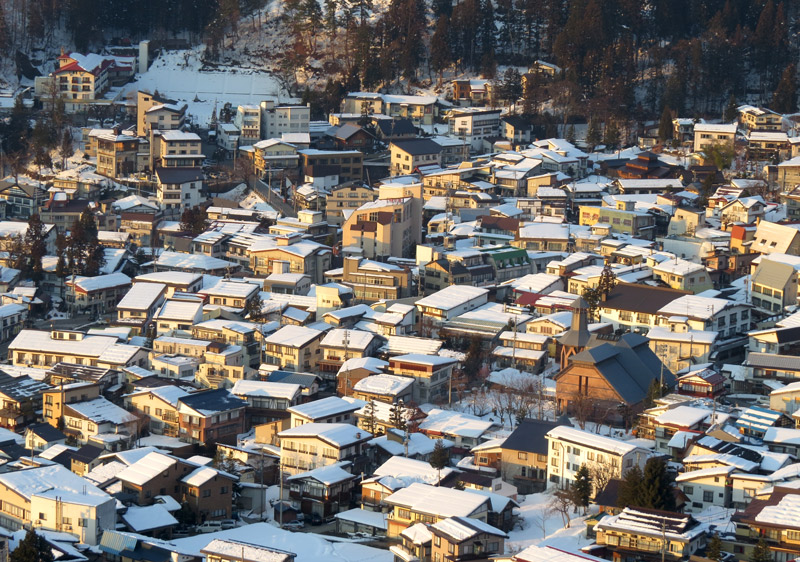
One possible way to increase capacity in the resorts would be focus on redeveloping Perisher, rather than Thredbo, Guthega, Smiggins and Charlotte Pass. Perisher benefits from rail access to bring in guests and goods and even take out waste. At the moment Perisher resembles a sort of sprawling suburbia/car park with a brutalist transport interchange in the middle of it. I wouldn’t be opposed to a master plan that sought to redevelop Perisher into an eco-focused walkable village along the lines of Thredbo or a miniature Whistler or Banff or Nozawa Onsen. There are ways to implement some growth in a sensitive way, but this plan doesn’t give me any real faith it will be handled well.

Nozawa Onsen in Nagano shows how a compact walkable mountain village can be. Note the distinct lack of cars in (or out of) frame. Source: powderhounds

A Bypass for Jindabyne

Aside from all that negativity about the wanton overdevelopment of one of our states most fragile ecosystems, there are a few things to like about the 2021 plans. Two of the stated key drivers for change that particularly excite me are:

  1. Prioritising people over vehicles in Jindabyne providing access and ensuring walkability and pedestrian safety
  2. The connection to Lake Jindabyne, ensuring public spaces take advantage of views andvistas, along with the provision of improved linkages to the Town Centre

I’ll be frank; I don’t like Jindabyne. Every time I drive through Jindy, which is fairly often (see above), I can’t help but think what Jindy could be. Before I had skied overseas I didn’t think much of it. It was a glorified strip mall on the way to the snow. Nothing wrong with that, it met an important need! Where else to get alpine diesel, last-minute replacement goggles and rent chains?

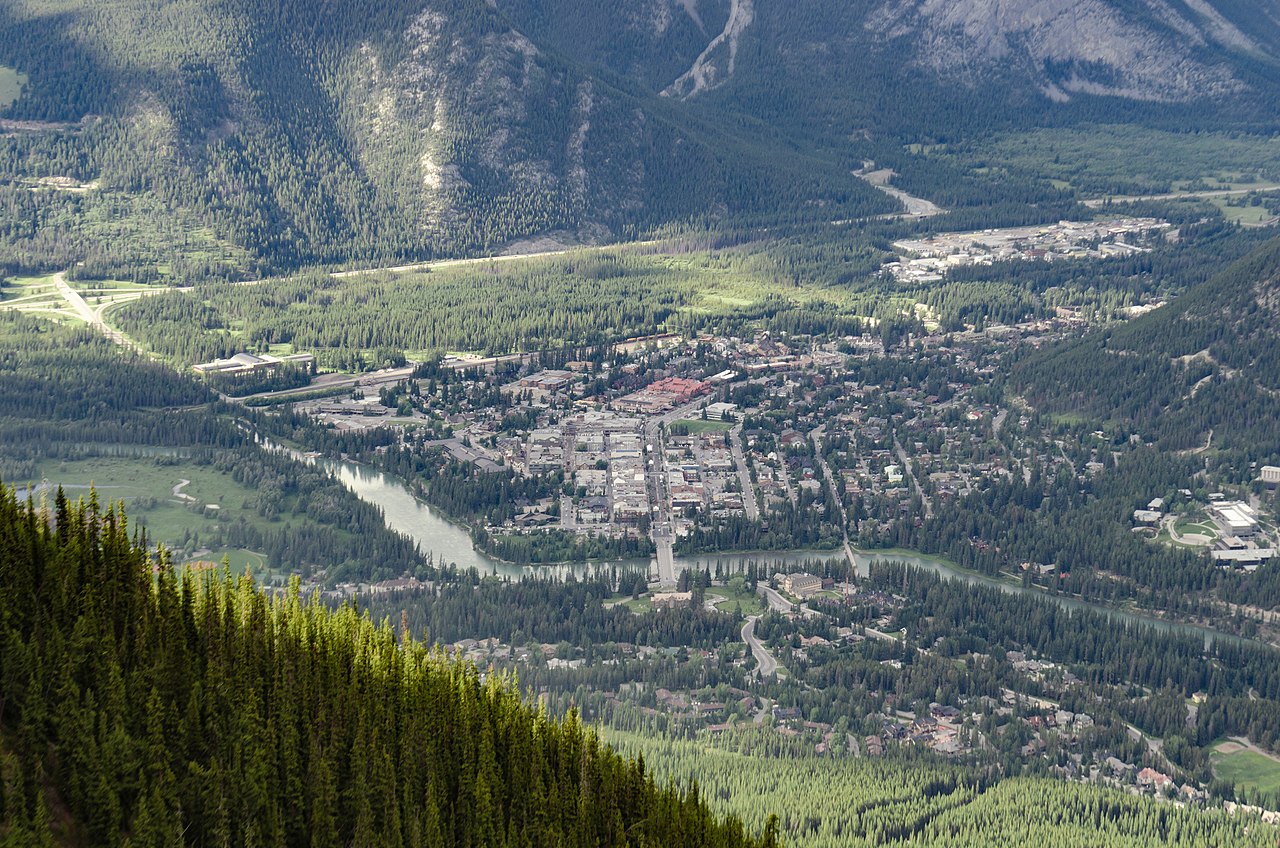
Now though, having seen how things are done in Canmore, Banff and Whistler in Canada and Nozawa Onsen, Myoko and Hakuba in Japan, I can’t help but think what a real tourist town alpine village can be like and wonder how on earth the auto-centric hellscape of Jindabyne is what we got stuck with!? It’s tempting to blame the Snowy Mountains Hydro Scheme, they did flood the valley and built the town after all. But we managed to build Thredbo with some sort of cohesive, walkable style, so why haven’t we done anything to fix Jindabyne? The way I look at it, the town has only gotten worse over those intervening years. In season it’s one long traffic jam of people trying to get out of there.

Banff is an alpine tourist town in Alberta that provides accommodation for visitors to 3 major nearby resorts. It’s got a walkable downtown, an okay bus service and heaps to do in the immediate area. Source: wikimedia

With the kind of investment the plans are talking about Jindabyne could be a player on the scale of those destinations in Japan and Canada, or the no doubt countless European examples I don’t have first hand experience of.

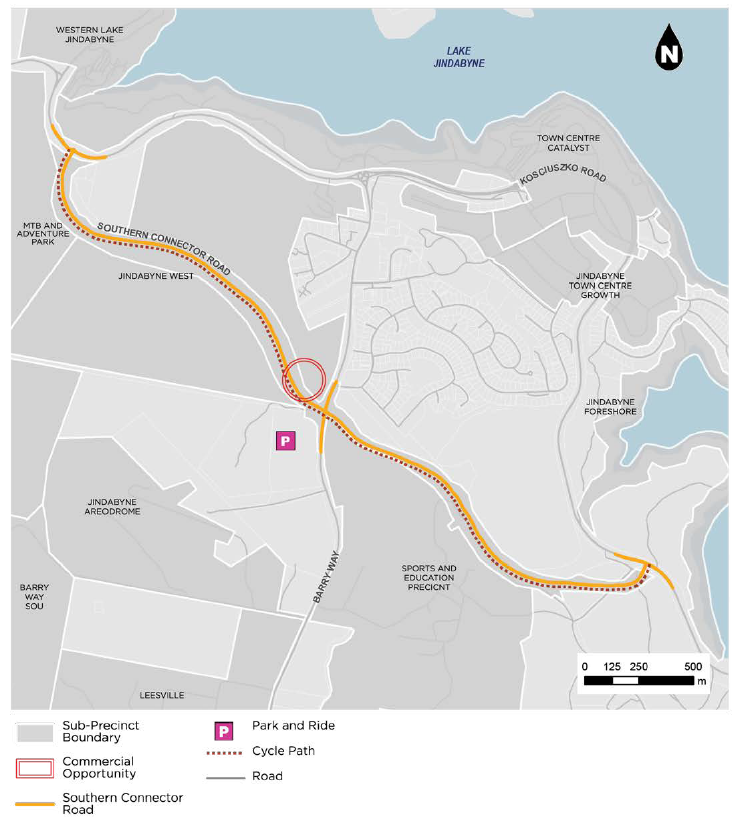
The good news is, the Special Activation Precinct Masterplan (SAPM) seems to be serious about realising the vision. The main thing holding Jindy back is the fact that a 4 lane highway traverses right through the guts of the town, cutting its strip-mall main street off from the lake and parklands. This will be addressed by building a ‘Southern Connector’ bypass of the town. The old highway will be cut down from 4 lanes to 2 with bike lanes, trees and hopefully footpaths that are still sadly lacking. The whole town centre will be redesigned to put the emphasis towards Snowy River Avenue and Thredbo Terrace and away from the highway. The parklands and foreshore will be dramatically improved, and lots will be rezoned, encouraging an increase in density and walkability in the town centre.

This beautiful orange line will make all my dreams come true. Source: NSW Government

Further than that, the mountain bike and walking trail infrastructure around the town is set for huge improvement which will hopefully mean that more and more outdoor recreation can happen in and around town and not take place exclusively in the National Park, which we might pause and consider, was originally set aside for ecological conservation rather than to facilitate economic growth.

They’ve also flagged the entirety of the caravan park, which takes up the best part of the town, sprawling across the lakeshore immediately across the road from the main shops, to be redeveloped into a little beach, parkland and “future development site”. You know an Australian tourist town has really made it when they finally get the caravan park out of their main street. Of course, we will lose some of the cheapest accommodation in the town, but hopefully this will be more than made up for with abundant alternatives around the place. Hopefully including some free camping opportunities nearby!

There’s lots more to the plan for Jindy, including a huge mountain bike park accessed by a gondola and a big new caravan park located further around the lake. It’s worth checking out in the masterplan.

This really feels like a chance to breath some fresh life into the town and create that year-round outdoor sport and rec hub the state government is looking for.

But still not getting serious on public transport

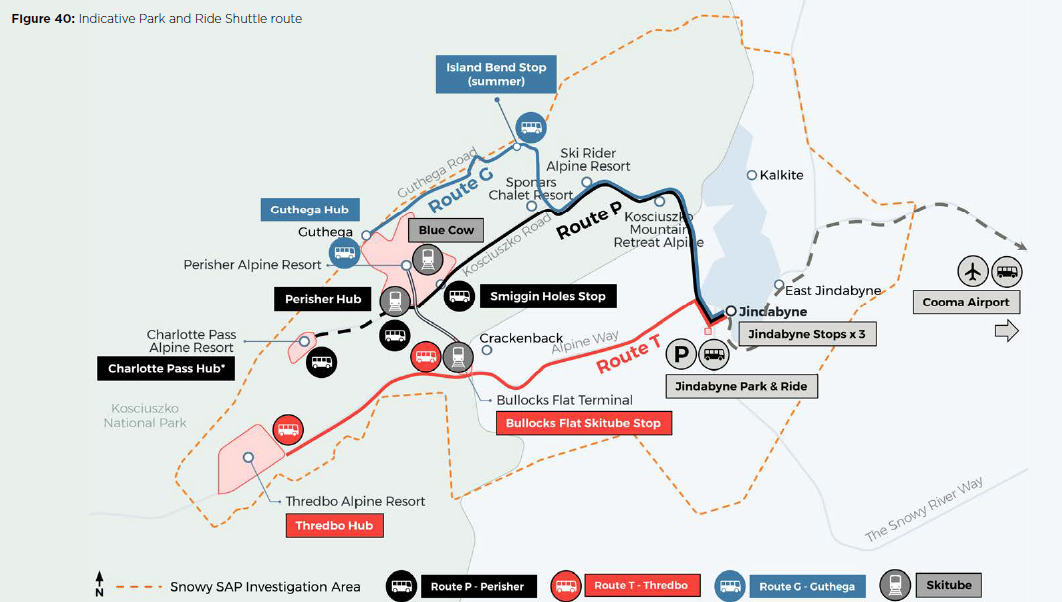
The SAPM makes the first real inroads into developing something resembling a proper public transport system for the Snowies. It outlines an idealised future network with year-round service on 3 limited stops bus routes; T from Jindabyne to Thredbo via Bullocks Flat, P from Jindabyne to Perisher (extending to Charlotte Pass in Summer) and G from Jindabyne to Guthega. These buses would leave Jindy Town Centre, stop at a new park and ride facility on the Southern Connector Bypass on the outskirts of Jindy before making their way to the resorts.

The proposed Snowies public transport network looks good, but the devil is in the detail. Without an affordable and frequent service and expensive car parking, it’s hard to see this network being a success. Source: NSW Government

At the current point in time there is no viable public transport options in the valleys. Greyhound head to Thredbo via Bullocks Flat (for Perisher) once a day and there’s a bunch of other operators that you can book onto for skiing day trips. But if you’re in a group (of a few as 2), own a car and a set of chains or are travelling in summer, the best, cheapest, fastest and most convenient way to get up into the mountains has always been to drive.

This has created the unfortunate situation where the roads and car parks are basically at capacity during peak times. On busy weekends in winter Thredbo literally turns cars away and at Charlotte Pass in summer the cars parked along the Kosciuszko road can extend for kilometres.

It is a classic case that the best choice for the individual is always to drive which leads to traffic jams, dangerously congested roads in wintertime and sprawling car parks.

Something needs to change, and a frequent, reliable, bus network based in Jindabyne is the obvious solution. If the accommodation of visitors is focused on Jindabyne and a large, centralised park and ride is provided for those coming from further afield, it should be quite simple to provide a good bus service, since pretty much everyone is going to one of two places.

I would think the Alpine Way is the logical route to start with, since you can change at Bullocks Flat for access to Perisher and Blue Cow via the Ski Tube.

The SAPM does outline the bones of what a future network might look like, but it doesn’t do much do indicate that there is the will to get us there. The page on improving public transport ends with the rather weak promise that:

“Over the course of the next year the Department of Regional NSW and Transport for NSW will lead an initiative to trial a shuttle service, to reduce pressure on Alpine Way and Kosciuszko Road and provide further data to support the development of a park and ride service in line with the Master Plan.”

This doesn’t seem like much of plan when we’re talking about a fragile ecosystem that experiences road closing extreme weather events and is already at capacity, oh, and we’re planning on increasing accommodation availability by 40% in the alpine villages and growing Jindabyne by at least the same amount.

The real deal is apparent on the next page of the masterplan, which states plans for more parking at Perisher, Smiggins, Pipers Gap, Charlotte Pass and Thredbo. The numbers aren’t spelled out, but if there is a more destructive thing we could do to our alpine valleys than pouring concrete and bitumen over them for the storage of private vehicles, I don’t know what it is.

The other overlooked element here is connections to Jindabyne from the outside world. As it stands you can fly to Cooma and take a bus or taxi connection to the snowfields, but short haul flights don’t really fit in with the whole ‘limiting human impacts on alpine ecosystems’ thing, so hopefully that isn’t something we foster. Instead, we need better public transport from Canberra and Sydney to Cooma and from Cooma to Jindabyne. There should be more than one public coach a day connecting Canberra to Cooma. Maybe even investigate the possibility of reopening the railway line that was closed in the 80s.

The future of our alpine resorts should be about building walkable villages with solid, all day, year-round affordable public transport connections and limited and expensive parking for those that need it. Alas, it looks like the bulk of the increase in people visiting the area will continue to do so by car.

Last but definitely not least

The elephant in the room for this whole hoo-ha is obviously climate change. The revisions to the plan of management acknowledge increasing maximum temperatures, significantly reduced precipitation and a dramatic reduction in the number of nights that are suitable for snow making. This might make the decision to build great swathes of new tourism infrastructure strange, but it isn’t. This plan is about repositioning the Snowies as a year-round destination. The snow sports focus is being phased out. The end of white winters won’t spell the end of the Snowies, not if the NSW government can help it. Instead, escape the endless heat! Climb to the top of Australia and enjoy being outdoors again, like you once did on lower climes. Lest we forget.

Public exhibition on the plans is currently open until August 23rd. You can read all about the plan and make your submission here. I would also encourage you to read what the National Parks Association of NSW have to say about the plans here.

Page 4 of 10

Powered by WordPress & Theme by Anders Norén